
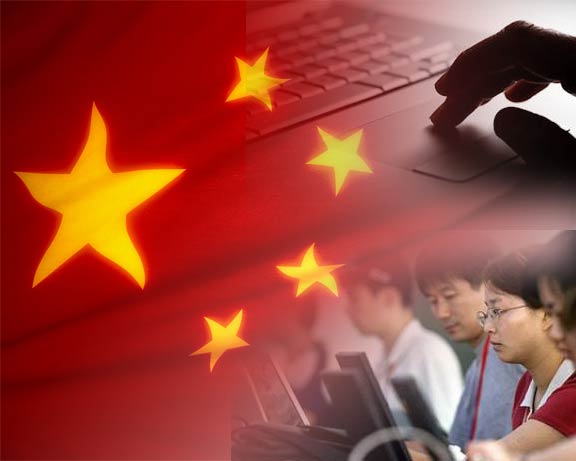
Companies from the West are starting to bring manufacturing of their products back to their own countries or to a country very near to their own, which is known as 'near-sourcing'. They are doing this because, as the Chinese economy grew so did the wages of its people. Their standard of living went up which meant that the benefit of the low wages the country had were no longer a competitive advantage.
But, if the costs benefit was not there anymore, what about the quality offered by Chinese manufacturers?
This is another reason why more companies are moving their manufacturing back to their own countries, namely quality. Many manufacturers in China are not making products up to a standard of quality which is acceptable to consumers in the West. I met the CEO of a UK company recently who is doing exactly this because he was fed up with the poor quality of the Chinese manufacturer he worked with. His manufacturing is coming back to the UK.
But, the Chinese economy is also suffering from a lack of protection of intellectual property rights. Many companies are suspicious of taking their products to China because of the fear of their intellectual property being stolen. The Chinese economy is littered with rip-offs of products and services from the West, such as fake Apple stores, fake Starbucks shops, rip-off cars, gadgets and more.
The current election campaign for the Presidency of the USA is full of speeches from Mitt Romney talking about tough he is going to be with the Chinese to stop them stealing US intellectual property. The political rhetoric is growing as is the noise on social media such as the tweet below, typical of the noise about China:

siscopiso
RT @Technocratista: RT @Technocratista: If Romney wins I'm taking up Chinese because this guy will put the final nail in the coffin of US economy. Nihau!
Friday, October 05, 2012 1:25:07 PM
RT @Technocratista: RT @Technocratista: If Romney wins I'm taking up Chinese because this guy will put the final nail in the coffin of US economy. Nihau!
Friday, October 05, 2012 1:25:07 PM
But, the reality is that the Chinese economy is slowing down and it is changing. No longer can it rely on cheapness as an advantage. It has to adapt to focus on innovation and take intellectual property seriously to compete. Chinese companies need to go beyond respecting knowledge and embrace developing their own innovative products and protecting their intellectual property to grow their economy. This will have the added benefit of encouraging more businesses, large and small, to invest in China and to bring their innovations to the country.
Next week, I am co-presenting with a colleague at the British Library to help small businesses to look at whether they manufacture their products in China and how to trade in China and protect their intellectual property. There is a demand for knowledge about this decision.
Here is some further reading about trading in China and its economy:
Econbrowser: China's economic slowdown
 www.econbrowser.com9/26/12
September 26, 2012. China's economic slowdown. As Niels Bohr (and others) observed, prediction is difficult, especially about the future. But if the challenge is predicting the number of 20-year-olds 5 years from now, you can ...
China's economy: The sceptics' case | The Economist
 www.economist.com9/25/12
MICHAEL PETTIS, a thoughtful analyst of the Chinese economy who teaches at Peking University, has long been sceptical that China's investment-heavy economy can...
Buying through a trading company or an agent in China
 www.qualityinspection.org9/24/12
I mentioned in several articles that trading companies are sometimes the best choice for small importers. And two people asked me to confirm/explain it recently. I think it depends on several factors, such as: Do you have time ...
Comments
Post a Comment
Thank you for your comment!